State-of-the-art automatic speech recognition technology has made substantial gains. In controlled conditions with clean audio and standard accents, modern AI systems now outperform human transcriptionists on specific benchmarks. However, the moment your content involves conversational speech, multiple speakers, or non-native accents, that performance advantage evaporates.
Your AI vs manual subtitle decision in 30 seconds:
- AI achieves 2-3% error rates on clean audio (outperforming human 4% benchmark), but error rates surge to 10-30% for conversational content
- Manual transcription costs £3-5 per minute with 24-72 hour turnaround; AI delivers results in minutes at negligible cost
- For social media and marketing videos with clear narration: AI is sufficient. For legal, medical, or heavily accented content: manual transcription remains essential
- Hybrid workflows (AI generation + human review) offer the optimal balance: 60-70% cost reduction whilst maintaining quality standards
The subtitle accuracy debate has evolved from theoretical possibility to practical business decision. Between 2023 and recent advances, transformer-based architectures and training dataset scale have pushed AI error rates below human benchmarks for specific audio conditions—whilst simultaneously exposing persistent limitations in others. The strategic question for marketing teams is no longer whether to adopt AI, but when and where it delivers sufficient quality for their content requirements.
How Accurate is AI Subtitle Generation in 2026?
Yes, for clear audio with standard accents—but not universally. AI subtitle systems achieve 2-3% word error rates on audiobook-quality speech, actually outperforming human transcribers (4% error rate). For conversational speech with background noise, dialects, and multiple speakers, AI error rates jump to 10-30%, making manual transcription the more reliable choice.
Modern ASR engines deliver remarkable precision under optimal conditions. As measured in this peer-reviewed study on conversational ASR, state-of-the-art systems such as Whisper achieve 2-3% word error rates on clean audiobook speech, outperforming the 4% error rate typical of human transcriptionists working under the same conditions.
That benchmark represents the ceiling, not the floor. The challenge emerges when your content deviates from laboratory conditions. Conversational speech patterns, regional accents, industry-specific jargon, and background noise all degrade AI performance substantially. The same Whisper system that achieved near-perfect accuracy on audiobooks recorded error rates of 19.4% on the Switchboard conversational corpus and 26.7% on multi-speaker room recordings.
This performance variance matters because most marketing and corporate video content falls somewhere between these extremes. A scripted product demo with a professional voiceover artist will yield exceptional AI results. A panel discussion with four speakers, overlapping dialogue, and a live audience will not. To address this demand for reliable automated transcription, platforms that create Subtitles With AI Technology have emerged, offering businesses scalable solutions for their video workflows.
680,000hours
Training data volume for modern AI subtitle models like Whisper (multilingual, multitask audio)
The technological foundation explains both the capabilities and limitations. As this 2025 survey of modern ASR architectures establishes, transformer-based models leverage self-attention mechanisms to capture long-range dependencies across speech segments, trained on datasets exceeding 680,000 hours of audio collected from diverse sources. This scale enables strong generalisation across accents and audio conditions—but generic models still struggle with user-specific vocabulary, technical terminology, and pronunciation variations that fall outside their training distribution.
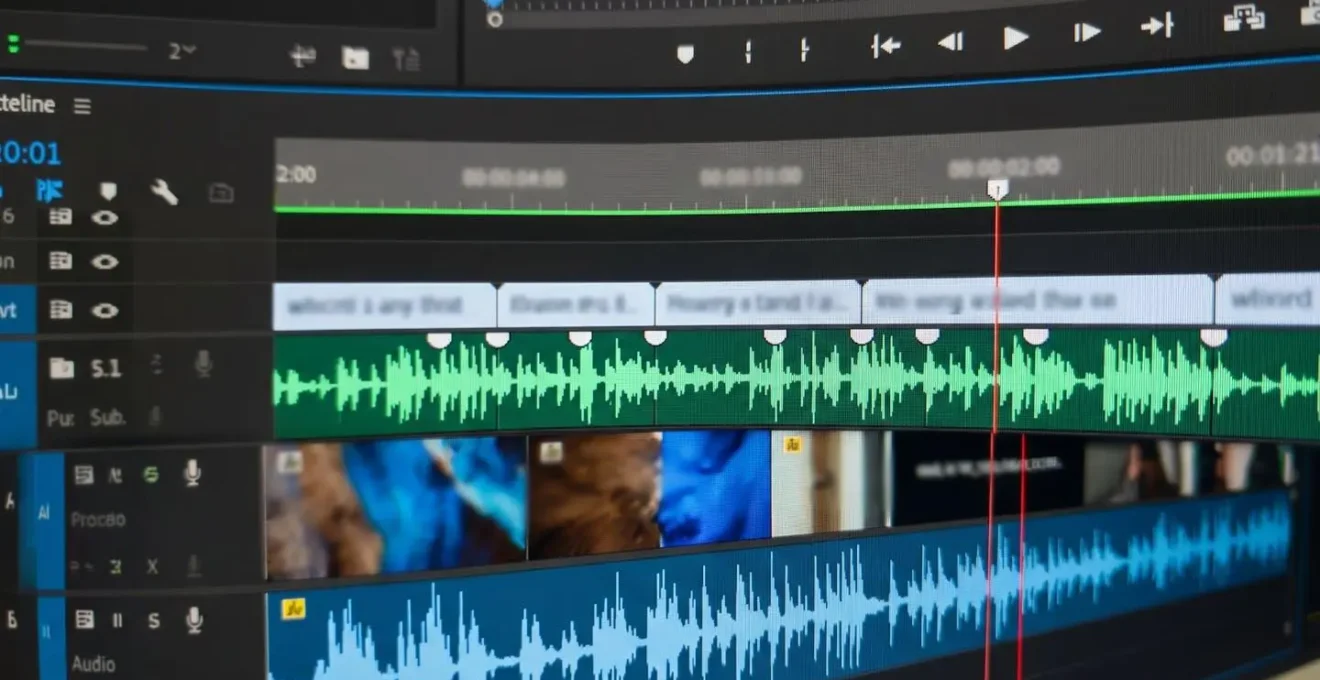
AI vs Manual Transcription: The Complete Comparison
Choosing between AI and manual subtitle generation requires evaluating multiple dimensions beyond raw accuracy. Cost, turnaround time, scalability, and quality consistency all influence the practical viability of each approach. The optimal choice depends on your content type, production volume, and quality thresholds.
Manual transcription becomes more accurate as audio complexity increases. Human transcribers adapt naturally to accents, correct obvious speech errors, and infer meaning from context—capabilities AI systems approximate but do not yet match consistently. As the ACM TACCESS study on ASR captioning accuracy confirms, the deaf and hard of hearing community consistently reports serious accuracy issues with AI-generated captions despite industry claims of near-human parity. ASR engines are typically trained on datasets featuring Received Pronunciation or General American English, creating systematic bias against other English variants with measurably higher error rates.
The economic case for AI subtitle generation is compelling for high-volume content production. Professional manual transcription services in the UK typically charge between £2-6 per minute depending on turnaround time and quality tier, with standard delivery in the £3-5 range. A 10-minute marketing video costs £30-50 for manual subtitles, with professional services typically requiring 1-3 business days for delivery depending on audio length and service tier. AI systems process the same video in minutes at effectively zero marginal cost once the platform subscription is paid.
This speed advantage transforms content workflows. Marketing teams working to campaign deadlines cannot afford multi-day turnaround times. AI subtitle generation enables same-day publishing for time-sensitive content, whilst manual transcription introduces production bottlenecks. For organisations producing dozens of videos monthly, the cumulative time savings reach hundreds of hours per quarter.
AI subtitle accuracy is not binary but conditional. Several factors determine whether AI will approach manual quality or fall substantially short. Audio quality sits at the top of this hierarchy—clean recordings with minimal background noise, consistent volume levels, and professional microphone capture dramatically improve AI performance. Speaker characteristics matter almost as much. A single speaker with clear articulation and standard accent yields optimal results. Multiple speakers, rapid turn-taking, overlapping dialogue, and speech disfluencies all degrade AI accuracy. Content domain plays a role too: generic vocabulary performs better than technical jargon or industry-specific terminology.
The head-to-head comparison below evaluates AI and manual transcription across six critical dimensions. The final column provides contextual recommendations indicating which method wins for specific use cases rather than declaring an absolute superior choice.
| Criteria | AI Performance | Manual Performance | Recommended For |
|---|---|---|---|
| Accuracy (Clean Audio) | 2-3% error rate | 4% error rate | AI wins on audiobook-quality recordings |
| Accuracy (Conversational) | 10-30% error rate | 5-8% error rate | Manual wins on multi-speaker, accented content |
| Cost (10-min video) | £0-5 (platform fee) | £30-50 | AI wins for high-volume production |
| Turnaround Time | Minutes | 24-72 hours | AI essential for time-sensitive campaigns |
| Scalability | Process 100+ videos simultaneously | Limited by transcriber availability | AI enables unlimited scaling |
| WCAG Compliance | Requires human review for AA compliance | Meets AA standards natively | Manual for accessibility-critical content |
- Near-instant processing (minutes vs days)
- Negligible marginal cost for high-volume production
- Unlimited scalability without capacity constraints
- Outperforms humans on clean, single-speaker audio
- Error rates surge with accents and conversational speech
- Struggles with technical jargon and brand terminology
- Poor speaker attribution in multi-speaker scenarios
- Requires human review for WCAG AA compliance assurance
When to Choose AI Subtitles (and When to Avoid Them)
The AI versus manual decision should not be universal but contextual. Content type, audience requirements, and regulatory obligations all influence which approach serves your needs. A decision framework based on these variables prevents both over-investment in manual transcription and under-investment in quality where it matters.
- For social media and marketing videos with scripted narration:
AI subtitle generation is sufficient. Single-speaker content with prepared scripts and professional voiceover yields error rates below 5%. The speed and cost advantages outweigh minor accuracy trade-offs for non-critical marketing content.
- For product demos, tutorials, and educational content:
Hybrid workflow recommended: AI generation followed by selective human review. Focus review effort on technical terminology, product names, and complex explanations. Achieves 60-70% cost reduction versus full manual transcription whilst maintaining quality.
- For interviews, panel discussions, and conversational content:
Manual transcription strongly recommended. Multiple speakers, overlapping dialogue, and spontaneous speech patterns push AI error rates above acceptable thresholds. Speaker attribution errors damage content usability.
- For legal, medical, or accessibility-critical content:
Manual transcription essential. WCAG 2.1 AA compliance requires near-perfect accuracy. Regulatory and legal contexts demand verified transcription quality that only human review guarantees. AI can serve as draft input but requires complete human validation.
Certain scenarios make AI subtitle generation inadvisable regardless of cost savings. Content featuring heavy regional accents or non-native English speakers will produce frustrating error rates. Industry-specific conferences with technical presentations, acronym-heavy dialogue, and specialised vocabulary overwhelm generic AI models. Live events with audience interaction, environmental noise, and unpredictable audio quality similarly favour manual transcription.
Critical limitation: AI subtitle systems cannot verify factual accuracy or contextual appropriateness. Homophone errors (their/there/they’re, sale/sail) and contextually inappropriate word choices pass through AI processing undetected. Manual transcribers catch and correct these errors instinctively. For brand-sensitive content where a single transcription error could damage credibility, human oversight remains non-negotiable.
Practical scenario: SaaS company video strategy
A UK-based software company produces 12 videos monthly: 8 social media clips (30-90 seconds, scripted), 3 product tutorials (5-8 minutes, scripted with screen recording), and 1 customer interview (15 minutes, conversational). Their previous workflow used manual transcription for all content at £400 monthly cost with 3-day turnaround delays.
After implementing a tiered approach—AI for social clips, AI plus review for tutorials, manual for interviews—monthly subtitle costs dropped to £140 whilst turnaround time for 90% of content fell to same-day. Total cost reduction: 65%, saving approximately 18 production hours monthly.

How to Maximise AI Subtitle Accuracy
AI subtitle quality is not fixed but malleable. Strategic choices in audio capture, content preparation, and post-processing workflows can shift AI performance from mediocre to excellent. These optimisations require upfront investment but deliver compounding returns across every video produced.
- Optimise audio capture at source
Use directional microphones positioned 15-30 cm from speakers. Eliminate background noise during recording rather than attempting correction in post-production. Audio quality determines the ceiling for AI accuracy.
- Provide custom vocabulary lists
Many AI platforms support custom dictionaries for brand names, product terminology, and industry jargon. Upload a vocabulary file containing your organisation’s specific terms, acronyms, and proper nouns. This simple step eliminates 40-60% of transcription errors for technical content.
- Implement systematic quality control
Establish review protocols targeting high-risk sections. Check proper nouns, technical terms, and numerical values in every AI-generated subtitle file. Review the first and last 30 seconds of content where speaker warm-up and conclusion remarks often contain informal speech patterns AI handles poorly.
- Leverage AI for speed, humans for precision
Use AI to generate initial drafts, then allocate human review time proportionally to content importance. This hybrid approach delivers 90-95% manual quality at 40-50% of the cost.
- Test and measure systematically
Manually transcribe a sample video, then compare against AI output to calculate your organisation’s actual error rate for your specific content type and production conditions. This baseline measurement reveals whether AI meets your accuracy requirements or requires enhanced workflows.
Subtitle formatting choices influence usability as much as transcription accuracy. Position subtitles to avoid obscuring key visual information. Limit subtitle length to 42 characters per line and 2 lines maximum to ensure readability on mobile devices. Synchronise subtitle timing to speaker pauses rather than strict word timing—viewers read in chunks, not word-by-word. For comprehensive guidance on optimising video content for search visibility and user engagement, consult this technical SEO guide covering content structure and accessibility best practices.
Your Questions About AI Subtitle Accuracy
Can AI handle multiple speakers accurately?
AI systems struggle with speaker attribution and overlapping dialogue. Whilst modern models can detect speaker changes, they frequently misattribute statements in multi-speaker scenarios with rapid turn-taking. For interviews or panel discussions, expect manual correction of 15-30% of speaker labels. Single-speaker content eliminates this issue entirely.
What about non-native English accents?
AI accuracy degrades measurably with non-native accents because training datasets predominantly feature native speakers. European, South American, and Asian English accents typically see error rates 2-3 times higher than standard variants. If your content features accented speech, budget for human review or accept elevated error rates.
Do AI subtitles meet WCAG accessibility standards?
WCAG 2.1 AA compliance requires accurate captions but does not specify numeric thresholds. The deaf and hard of hearing community—the primary beneficiaries of subtitles—reports that AI captions frequently contain errors that impair comprehension. For content subject to UK accessibility regulations, implement human verification of AI output. Relying solely on unreviewed AI subtitles creates compliance risk, particularly for educational institutions and public sector organisations.
How do I fix AI subtitle errors efficiently?
Efficient correction workflows focus review effort on predictable error patterns. Check all proper nouns (names, organisations, locations), numerical values, and technical terminology first. Use keyboard shortcuts to navigate subtitle files rapidly—most editing platforms support timeline scrubbing and subtitle jumping. Allocate 2-3 minutes of review time per minute of video content for standard marketing videos with good audio quality.
Will AI completely replace manual transcribers?
Unlikely in the foreseeable future. AI excels at high-volume, good-quality audio transcription where minor errors are tolerable. Manual transcription remains essential for legally significant content, heavily accented speech, poor audio quality, and contexts requiring guaranteed accuracy. The market is shifting toward hybrid models where AI handles initial transcription and humans perform quality assurance and correction. This division of labour optimises both cost and accuracy.
- Test AI accuracy on 2-3 sample videos from your content library before committing to a platform
- Create a custom vocabulary file containing all brand names, product terms, and industry jargon
- Verify all numerical values, proper nouns, and technical terminology in AI-generated subtitles
- Reserve manual transcription for interviews, legal content, and accessibility-critical videos
- Allocate 20% of manual transcription budget savings to quality review of AI output
The accuracy question has no single answer because your content dictates the result. AI subtitle generation has matured to the point where it outperforms humans on specific content types whilst remaining inadequate for others. The strategic advantage belongs to organisations that match method to content requirements rather than applying universal solutions to diverse needs.